The history of ICAK Balticum
The history of origins of ICAK Balticum dates back to the end of the nineteen-nineties, when Professor Lyudmila Vasilieva first visited Riga.
Lyudmila Vasilieva was one of the first graduates of the course, taught by ICAK diplomats Joseph Shafer and Christofer Astil Smith in Russia in the early nineties. Professor Vasilieva enthusiastically embedded the acquired knowledge into her medical practice, as well as widely advocated it.
A professor of rehabilitation, Zinaida Kasvande, organized her first introductory course in AK together with Professor Vasilieva in Riga. The course immediately became popular among doctors, specializing in manual therapy. Olga Ivanovskaya, Mikhail Petrov, Vladimir Sklyarevich, Anita Dyachenko, Valeriy Kudoyar, Oleg Sukhorukov, Visvaldis Bebrišs, Uģis Beķeris and many others were amongst the first researchers of a new scientific discipline – applied kinesiology. In order to continue their studies, Sklyarevich, Ivanovskaya, Kudoyar and Sukhorukov headed to Novokuznetsk and Moscow, and completed a course in manual therapy, specializing in basics of AK and muscle testing.
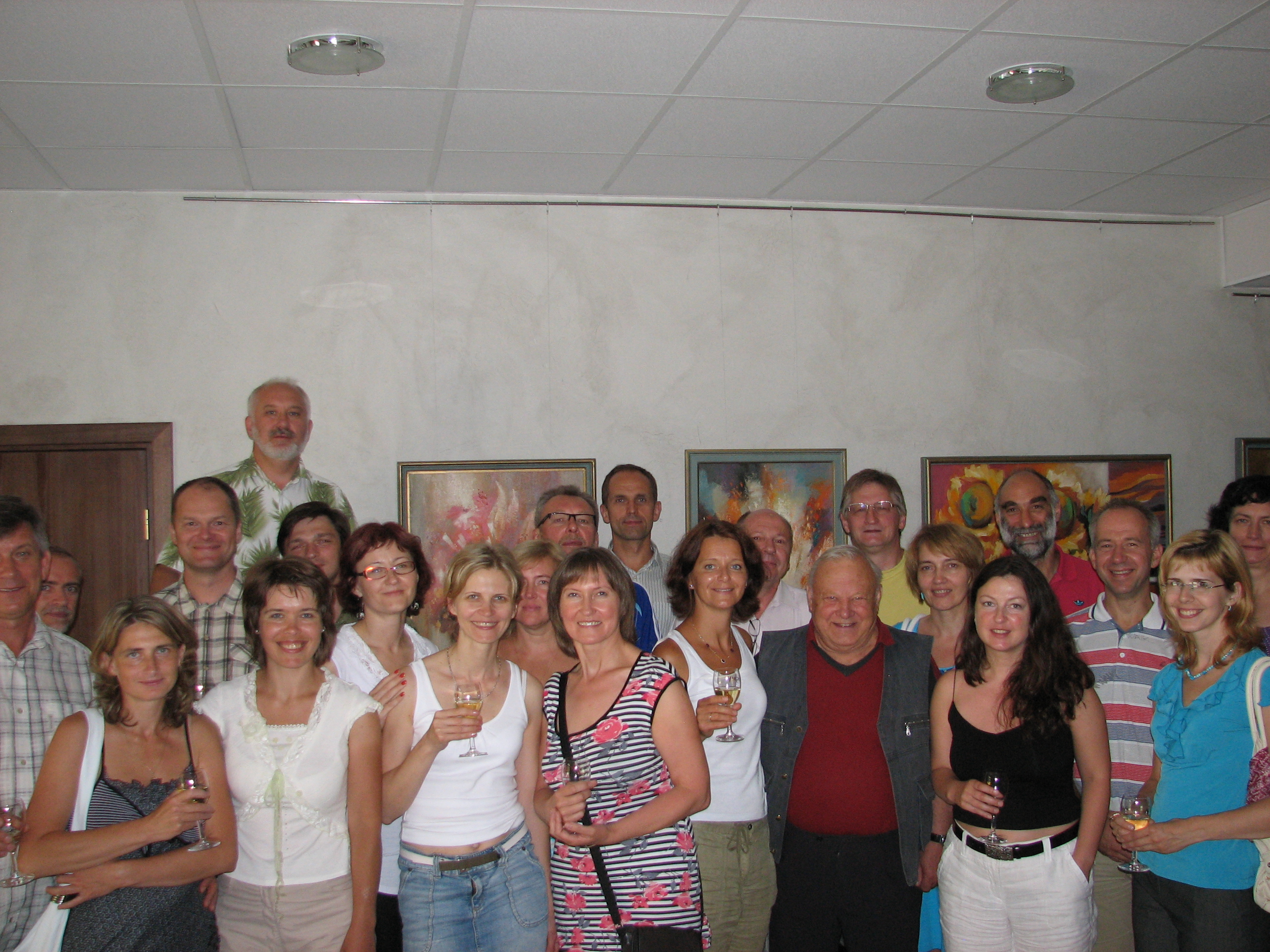 Thus, groundwork was laid for the following spreading of AK knowledge, as well as acquiring it in Latvia and the Baltics. The doctors kept on visiting courses in Russia, brilliantly taught by Joseph Shafer, Christofer Smith, John Diamond, Hans Garten.
A new impulse in the exploration and development of AK in the Baltics was the organization of a basic course in AK in the years 2004-2005 with the participation of German colleagues – Wolfgang Gerz and Karmen Kannengeizer. An off-site training course, which took place on the island of Rugen, Germany, rallied the Baltic colleagues based on a common interest in studying AK. In 2005, the foundation of the Baltic society of AK – ICAK Balticum, appeared to be a logical continuation.
With the participation of Estonian doctor Vasiliy Zagura, Lithuanian doctors Alfredas Marushko, Almantas Pocius, Dalus Barakauskas and others, it was possible to expand the geography of AK and create a department of ICAK of the whole Baltic region – ICAK Balticum. Wolfgang Gerz and Michel Alan were significantly involved, and so were John Diamond, Joseph Shafer and Tracy Gates, whose motivational performance helped found ICAK-Balticum. The foundation of a regional organization in AK allowed a more active participation in ICAK conferences all around the world. One of the highlights is when Valeriy Kudoyar and Oleg Sukhorukov visited Detroit in 2007. The colleagues had an unforgettable time acquiring new experiences and studying emotional sides of the health triad, in a course taught by a prominent psychiatrist, one of G. Goodheart’s first followers and closest allies, John Diamond, in his New York home.
The doctors were initially impacted by the founding father of AK, George Goodheart, in his home in Detroit, with the active participation of John Diamond. The communication and help of colleagues has supported ICAK-Balticum on its thorny path in mastering AK. On a conference in Amsterdam, Hans Garten, in a private conversation, offered Oleg Sukhorukov to pass the ICAK diplomat exam. His offer was motivated by the fact, that, in perspective, it would be possible for Russian-speaking specialists to pass the exam in their mother language.
A hard time started for Oleg Sukhorukov – a period of passing the diplomat exam. Boston, Toronto, Berlin, Bordeaux, Vienna – these were the geographical stages of passing the exam. Having passed it in 2010, Oleg Sukhorukov was accepted into IBE – the examination committee. The exam questions have since then been translated into Russian. Soon, there were new ICAK diplomats: Tatyana Chernishova, Sergey Pilavsky – they passed the exam in the Russian language. Once there are candidates in Latvia, who would want to pass the exam in their mother language, it will facilitate the translation of the exam questions into Latvian.
The organization of regular seminars with the participation of famous specialists, such as John Diamond, Tracy Gates, Joseph Shafer, Chris Smith, Harald Stossier, Jose Palomar and others contributes to the support of interest in AK among specialists in the Baltics on a high level. The success in medical work among the specialists, who have acquired AK, graphically demonstrates the advantages of this medical discipline. AK is being more and more popularized and it gives ground to hope that there will be a new generation of specialists, who would like to study AK, as well as that there will be new wonderful pages in the history of AK of ICAK-Balticum.
We are certain that the holding of the 52nd annual ICAK conference “Balance & Harmony” in Riga, Latvia from August 19 until August 21, 2016, will be a prominent event not only in the history of ICAK-Balticum, but also in the global community of applied kinesiologists.